Complete Guide to Soil TestiSoil Testing Laboratory: Complete Guide to Soil Testing & Geotechnical Investigation
A soil testing laboratory plays an important role in the planning, design and construction of safe and durable civil engineering projects. Before constructing a residential building, commercial complex, industrial structure, road, highway, bridge or other infrastructure project, it is essential to understand the engineering properties of the soil at the project site.
Soil may look similar from the surface, but its strength, density, moisture content, composition and load-bearing characteristics can vary significantly from one location to another. Professional soil testing helps engineers and construction professionals understand these properties and make appropriate decisions regarding foundation design, earthwork, pavement construction and overall project planning.
RK Soil Lab LLP, Lucknow provides soil testing, geotechnical investigation and construction material testing services for different types of civil engineering and infrastructure projects.
What Is a Soil Testing Laboratory?
A soil testing laboratory is a specialized facility where soil samples collected from construction sites are examined using standard laboratory testing procedures. The objective is to determine the physical, chemical and engineering properties of soil.
The results obtained from soil testing can help engineers determine whether the existing ground conditions are suitable for the proposed construction and what type of foundation or soil improvement may be required.
Depending on the project requirements, laboratory testing may include moisture content, grain size analysis, Atterberg limits, specific gravity, compaction characteristics, shear strength and other relevant tests.
Why Is Soil Testing Important for Construction?
Soil is the foundation on which a structure ultimately depends. If the characteristics of the soil are not properly understood before construction, the project may experience problems such as excessive settlement, cracks, differential settlement, foundation instability or pavement failure.
A professional soil testing laboratory helps identify important soil characteristics before major construction work begins.
Soil testing can help with:
- Understanding soil classification and composition
- Determining soil strength and engineering properties
- Evaluating foundation conditions
- Estimating soil bearing capacity
- Designing suitable foundations
- Checking soil compaction
- Assessing road and pavement subgrade
- Identifying problematic soil conditions
- Supporting geotechnical engineering decisions
- Preparing technical soil investigation reports
Types of Soil Testing
Different construction projects require different types of soil tests. The selection of tests depends on the nature, size and technical requirements of the project.
1. Moisture Content Test
The moisture content of soil is an important parameter in geotechnical engineering. It helps engineers understand the amount of water present in a soil sample and can influence soil strength, compaction and other engineering properties.
2. Grain Size Analysis
Grain size analysis determines the distribution of different particle sizes within a soil sample. It helps classify soil and understand whether the material consists primarily of gravel, sand, silt, clay or a combination of these materials.
3. Atterberg Limits Test
Atterberg limits are commonly used for fine-grained soils. These tests help determine important consistency characteristics and assist in soil classification and engineering evaluation.
4. Standard Proctor Compaction Test
Compaction testing helps determine the relationship between soil moisture and dry density. It is particularly important for earthwork, road construction, embankments and filling operations.
5. Field Density Test
A field density test is used to evaluate the density achieved by compacted soil at the construction site. It can help determine whether the required level of compaction has been achieved.
6. Soil Bearing Capacity Testing
The bearing capacity of soil is an important consideration in foundation design. Appropriate field and laboratory investigations can provide information required by engineers for evaluating the ground conditions and selecting suitable foundation solutions.
Geotechnical Investigation and Soil Testing
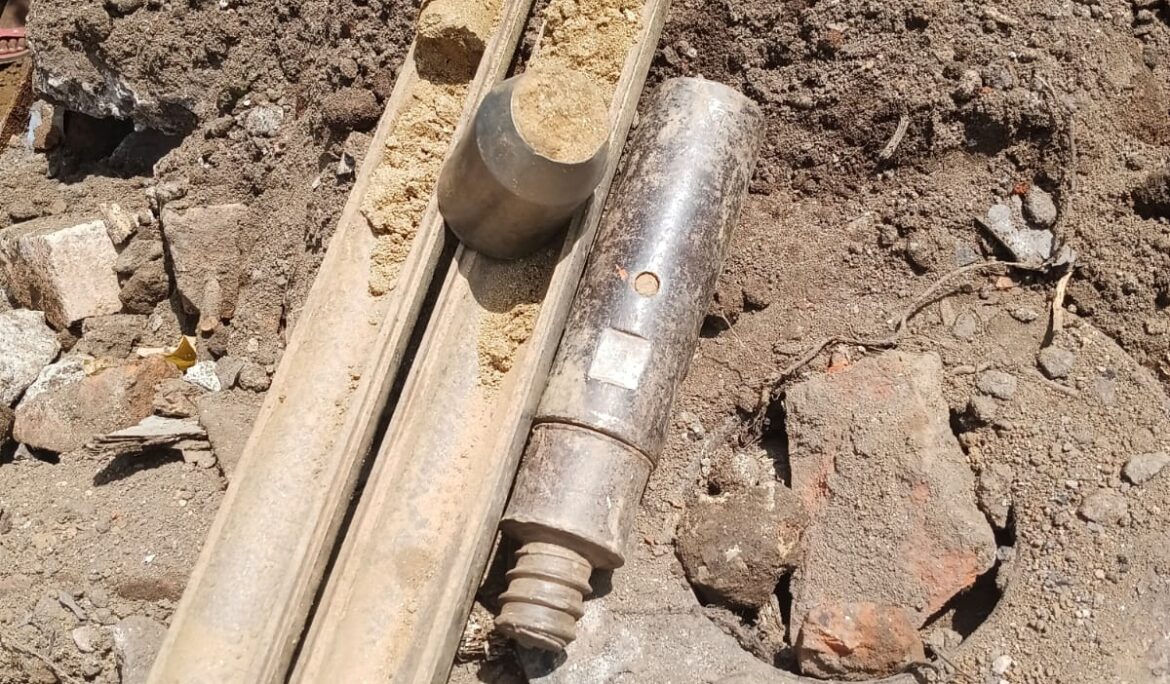
Geotechnical investigation is broader than laboratory soil testing. It generally involves investigating subsurface ground conditions through field exploration, sampling, in-situ testing and laboratory analysis.
Depending on project requirements, geotechnical investigation may involve methods such as:
- Standard Penetration Test (SPT)
- Dynamic Cone Penetration Testing
- Plate Load Test
- Soil sampling
- Groundwater observation
- Laboratory soil testing
- Rock testing
- Subsurface investigation
The information obtained from these investigations can be used by geotechnical and structural engineers for foundation and infrastructure design.
Soil Testing for Building Construction
For residential and commercial buildings, soil investigation is an important part of the pre-construction process. The condition of the soil can influence the selection and design of foundations.
Before constructing a building, engineers may require information about soil strata, density, strength, groundwater conditions and bearing characteristics.
A reliable soil testing laboratory can provide the necessary test results and technical documentation to support engineering decisions.
Soil Testing for Roads and Highways
Soil testing is also important for road and highway projects. The performance of a pavement depends significantly on the quality and engineering characteristics of the underlying subgrade.
Testing can help evaluate soil classification, compaction, strength and other properties required for pavement and earthwork design.
Proper investigation and testing can help identify weak or unsuitable soil conditions before construction and allow appropriate engineering measures to be considered.
Importance of Professional Soil Testing Reports
Testing alone is not enough; the results must also be properly documented and interpreted according to the requirements of the project.
A professional soil testing report generally contains information about the sample, testing procedure, test results and relevant engineering parameters. These reports can be used by consultants, engineers, contractors and project owners during project planning and design.
Accurate documentation also helps maintain technical records for construction and quality-control purposes.
Choosing the Right Soil Testing Laboratory
When selecting a soil testing laboratory, project owners and construction professionals should consider factors such as testing capabilities, technical expertise, laboratory facilities, reporting practices and the laboratory’s ability to handle the specific requirements of the project.
The laboratory should be capable of performing the tests required for the particular type of construction and should follow appropriate testing procedures and standards.
Why Choose RK Soil Lab LLP?
RK Soil Lab LLP, Lucknow provides soil testing and geotechnical investigation services for a wide range of construction and infrastructure requirements.
Our services can support residential, commercial, industrial and infrastructure projects requiring reliable soil and geotechnical information. Depending on project requirements, testing and investigation services may include soil testing, geotechnical investigation, SPT, DCPT, Plate Load Test, field testing and construction material testing.
With professional testing and detailed technical reporting, RK Soil Lab LLP aims to provide useful engineering data for better construction planning and quality control.
Soil Testing Laboratory in Lucknow and Other Locations
RK Soil Lab LLP is based in Lucknow, Uttar Pradesh and provides testing and investigation services for projects in Lucknow and other locations, subject to project requirements.
Whether you are planning a building, industrial project, road, highway, bridge or other civil engineering work, professional soil investigation can provide valuable information about the ground conditions before construction.
Frequently Asked Questions
What is a soil testing laboratory?
A soil testing laboratory is a specialized facility where soil samples are tested to determine their physical, chemical and engineering properties for construction and geotechnical applications.
Why is soil testing required before construction?
Soil testing helps engineers understand ground conditions, soil strength, density and other important properties that can influence foundation and construction decisions.
Which soil tests are commonly performed?
Common tests include moisture content, grain size analysis, Atterberg limits, compaction, field density and other laboratory and field tests depending on project requirements.
What is geotechnical investigation?
Geotechnical investigation is the process of studying subsurface ground conditions using field investigation, sampling, in-situ testing and laboratory analysis.
Where can soil testing be used?
Soil testing is useful for buildings, roads, highways, bridges, industrial projects, foundations, embankments and many other civil engineering applications.
Conclusion
A reliable soil testing laboratory is an important part of modern construction and geotechnical engineering. Proper soil investigation and testing can provide engineers with essential information about ground conditions, soil strength, density, composition and other engineering characteristics.
From building foundations to roads, highways and large infrastructure projects, soil testing supports better engineering decisions and helps identify potential ground-related issues at an early stage.
For professional soil testing, geotechnical investigation and construction material testing services, RK Soil Lab LLP, Lucknow can assist with project-specific testing and technical requirements.ng & Geotechnical Investigation
