
Plate Load Testing is an important field test used in geotechnical engineering to evaluate the bearing capacity and settlement characteristics of soil. Before constructing buildings, industrial structures, roads, warehouses, commercial projects, and other infrastructure, understanding the behavior of the underlying soil is essential for safe and economical foundation design.
At RK Soil Testing LLP, Plate Load Testing is an important part of geotechnical investigation and soil testing services. The test provides useful field information about how soil behaves when subjected to a load similar to the pressure that may be imposed by a foundation.
What is Plate Load Testing?
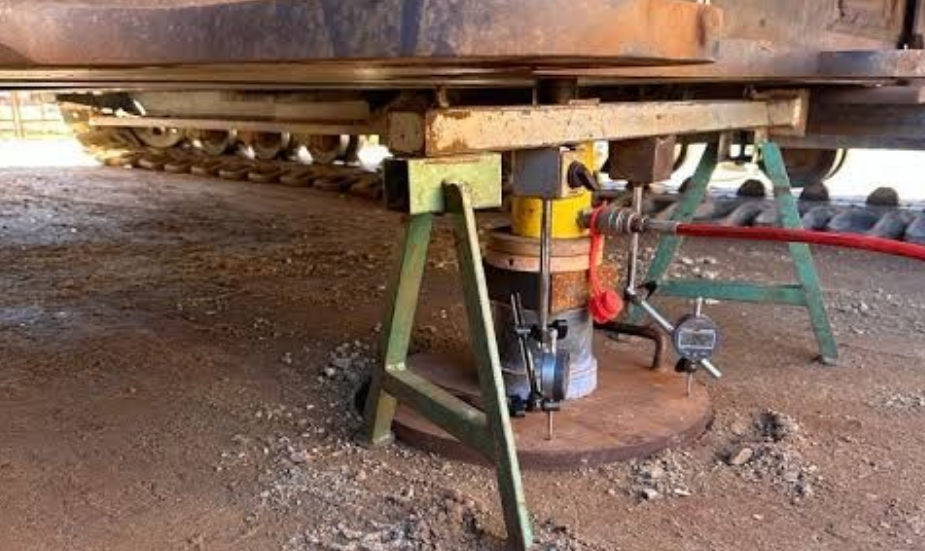
Plate Load Testing is an in-situ soil testing method in which a rigid steel plate is placed on the prepared ground surface or at the proposed foundation level. A gradually increasing load is applied to the plate, and the corresponding settlement is measured.
The relationship between the applied pressure and settlement helps engineers understand the load-bearing behavior of soil.
The test can be particularly useful for evaluating:
- Soil bearing capacity
- Settlement characteristics
- Pressure-settlement behavior
- Allowable soil pressure
- Foundation design parameters
- Performance of near-surface soil
The results should be interpreted by qualified geotechnical professionals because actual foundation behavior can depend on soil type, foundation size, depth, groundwater conditions, and other site-specific factors.
Why is Plate Load Testing Important?
The stability of any structure depends significantly on the ground supporting its foundation. If the soil has insufficient bearing capacity or excessive settlement occurs, structural problems can develop.
Plate Load Testing helps engineers obtain field-based information about soil behavior rather than relying only on laboratory testing or generalized assumptions.
The test can help in:
1. Determining Soil Bearing Capacity
One of the primary purposes of a Plate Load Test is to evaluate the bearing behavior of soil under applied pressure.
The results can help engineers assess the pressure that the soil can support within acceptable settlement limits.
2. Evaluating Settlement
Different soils respond differently when subjected to loads. Some soils may experience relatively small settlement, while others may undergo significant deformation.
Plate Load Testing provides pressure-settlement data that can assist engineers in evaluating this behavior.
3. Supporting Foundation Design
Foundation engineers can use the test results along with other geotechnical information to develop suitable foundation recommendations.
This can be useful for:
- Building foundations
- Industrial structures
- Warehouses
- Commercial buildings
- Pavement-related works
- Infrastructure projects
4. Understanding Field Conditions
Laboratory soil tests are valuable, but field conditions can differ from laboratory specimens. An in-situ test such as Plate Load Testing provides direct information about the soil at the test location.
Plate Load Test Procedure
The exact procedure may vary depending on the project specifications and applicable standards, but a typical Plate Load Test generally involves the following steps.
Step 1: Selection of Test Location
The test location is selected according to the proposed foundation or project requirements. The testing depth and location should represent the soil conditions relevant to the structure.
Step 2: Preparation of Test Area
The ground is prepared at the required test level. The test surface should be properly leveled and prepared so that the loading plate can be placed correctly.
Step 3: Placement of Loading Plate
A rigid steel plate of specified dimensions is placed on the prepared soil surface.
Step 4: Installation of Loading Arrangement
A suitable loading system is arranged to apply the required pressure to the plate. A reaction system is generally used to provide the necessary counterforce.
Step 5: Installation of Settlement Measuring Equipment
Dial gauges or suitable displacement measuring instruments are installed to accurately monitor the vertical settlement of the plate.
Step 6: Application of Load
Load is applied gradually in predetermined increments. After each load increment, settlement is monitored and recorded according to the applicable testing procedure.
Step 7: Recording Pressure and Settlement
The applied pressure and corresponding settlement readings are recorded throughout the test.
Step 8: Preparation of Pressure-Settlement Curve
The collected data can be plotted to develop a pressure-settlement relationship. Engineers then interpret the curve and other relevant information to evaluate soil behavior.
